Who Built the Statue of Liberty? Complete History, Design & Construction Explained
The Statue of Liberty is not only one of the world’s most famous landmarks but also a symbol of freedom, hope, and opportunity. Standing tall on Liberty Island in New York Harbor, this monumental statue has welcomed millions of visitors and immigrants for over a century.
From its design in France to its arrival in New York, Lady Liberty tells a story of international friendship and shared ideals.
Visitors can admire her towering presence, explore the museum inside the pedestal, and enjoy spectacular views of the city.
Whether you’re traveling for history, culture, or sightseeing, the Statue of Liberty is a must-see attraction for everyone visiting New York.
Who Built the Statue of Liberty?
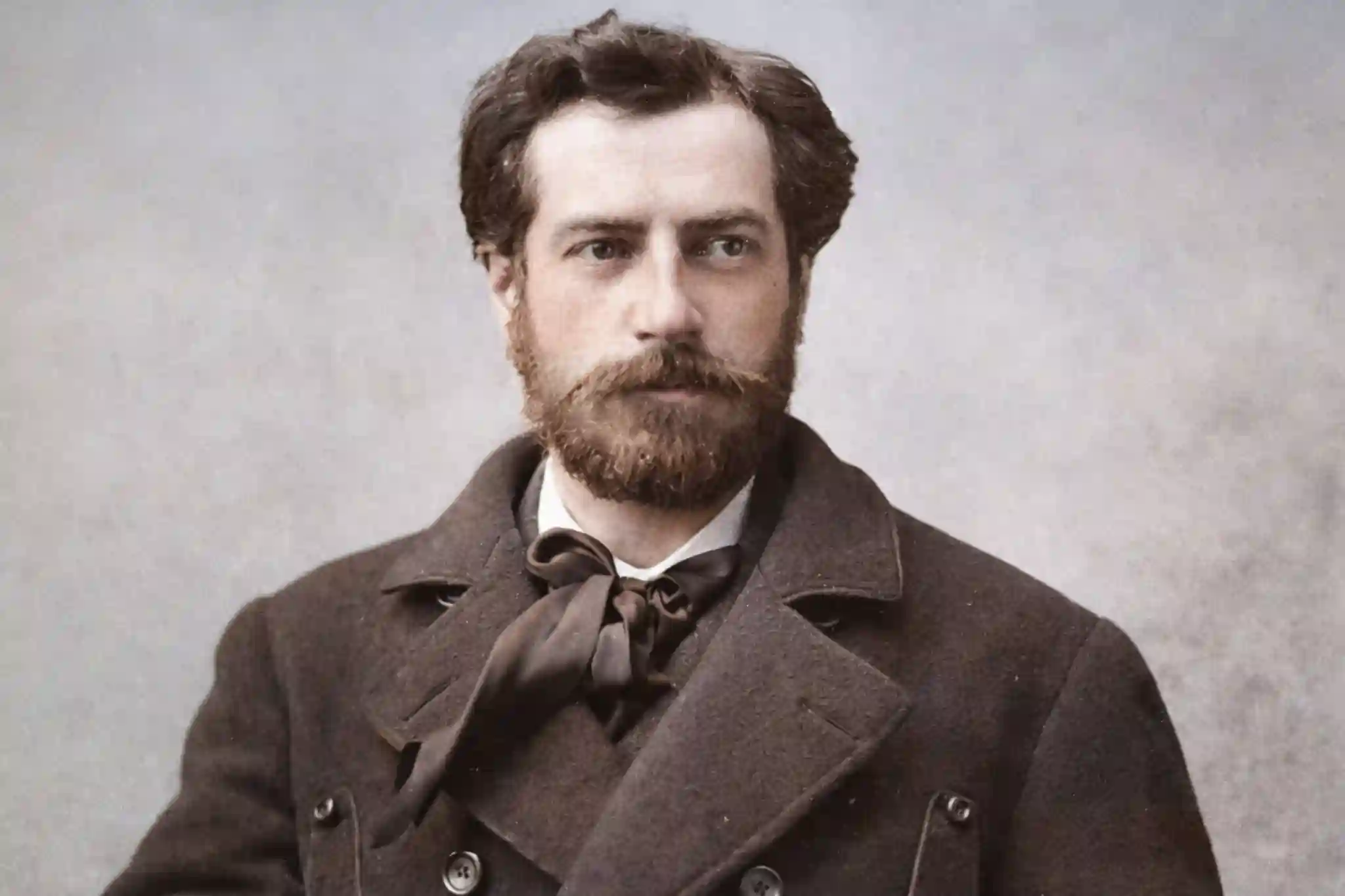
The Statue of Liberty was created through an extraordinary partnership between France and the United States. French sculptor Frédéric Auguste Bartholdi designed the statue, drawing inspiration from classical Roman figures and the goddess of freedom, Libertas.
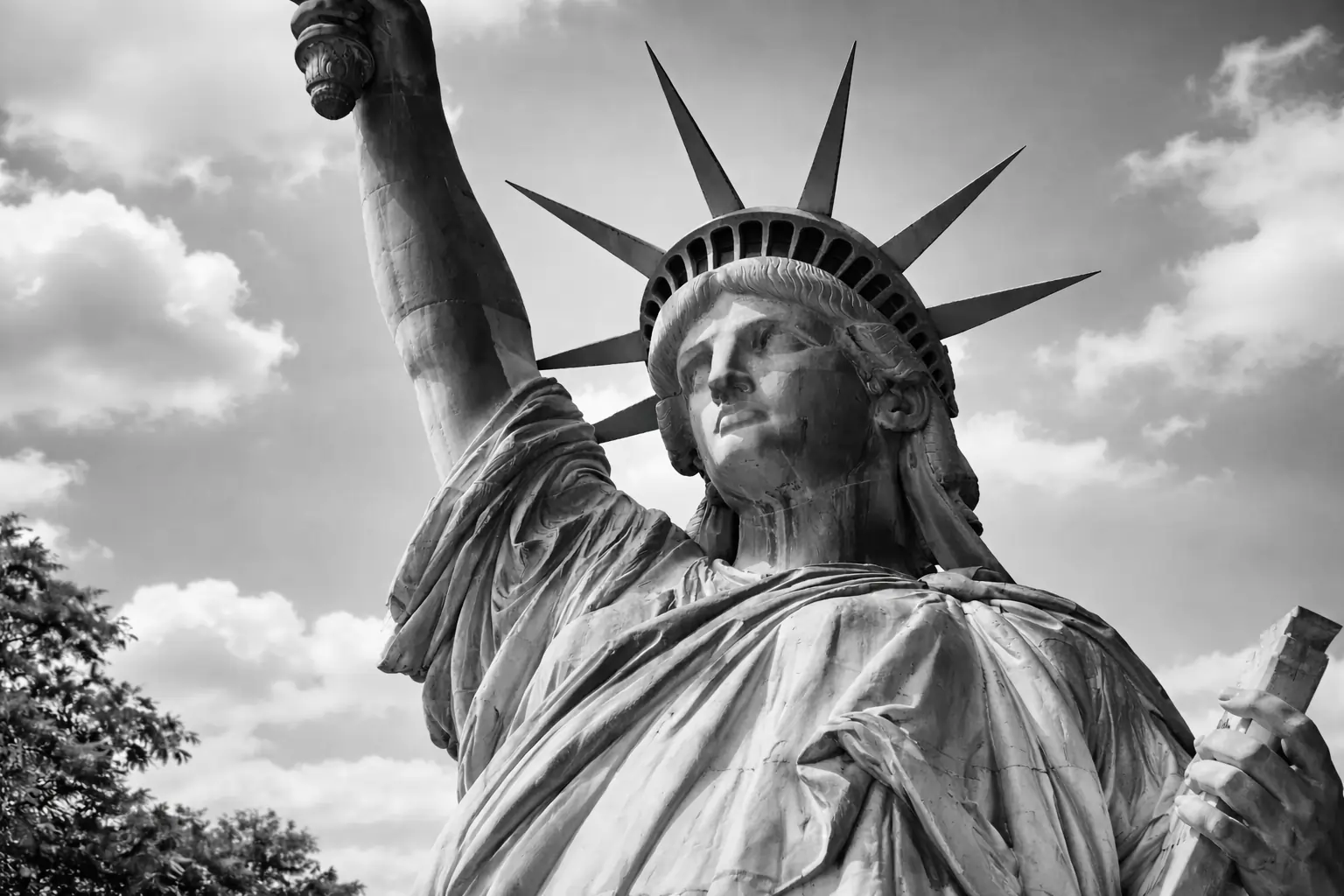
The iconic figure wears flowing robes, holds a torch symbolizing enlightenment, and has a tablet inscribed with “JULY IV MDCCLXXVI”, the date of American independence. Broken chains at her feet represent freedom from oppression, and the seven spikes of her crown symbolize the seven continents and seven seas.
French engineer Gustave Eiffel, famous for the Eiffel Tower, built the strong iron framework that supports the massive copper exterior. This design allows the statue to move slightly in wind and temperature changes, ensuring durability for over 135 years.
Funding came from both nations. The French people donated through concerts, lotteries, and public campaigns, raising roughly 2.25 million francs for the statue itself. In the U.S., Joseph Pulitzer’s newspaper campaign rallied over 120,000 donors, raising more than $100,000 for the pedestal.
Together, these efforts brought Lady Liberty to life as a gift celebrating freedom, democracy, and Franco-American friendship.
The Complete History of Lady Liberty
How the Idea and Design Started (1865-1875)
The idea for the Statue of Liberty began in 1865 when Édouard René de Laboulaye, a French political thinker and abolitionist, proposed a monument honoring American independence and democratic ideals.
Bartholdi accepted the concept and traveled to the U.S. in 1870 to choose Bedloe’s Island (now Liberty Island) as the statue’s site.
Bartholdi studied classical sculptures, experimented with small models, and carefully planned every detail to symbolize liberty and progress. His design was inspired by the Colossus of Rhodes, and some people believe the face may be based on his mother, Charlotte.
The broken chains at her feet show freedom from slavery, giving a modern meaning to the statue’s classic design.
How the Statue Of Liberty Was Built (1875-1884)
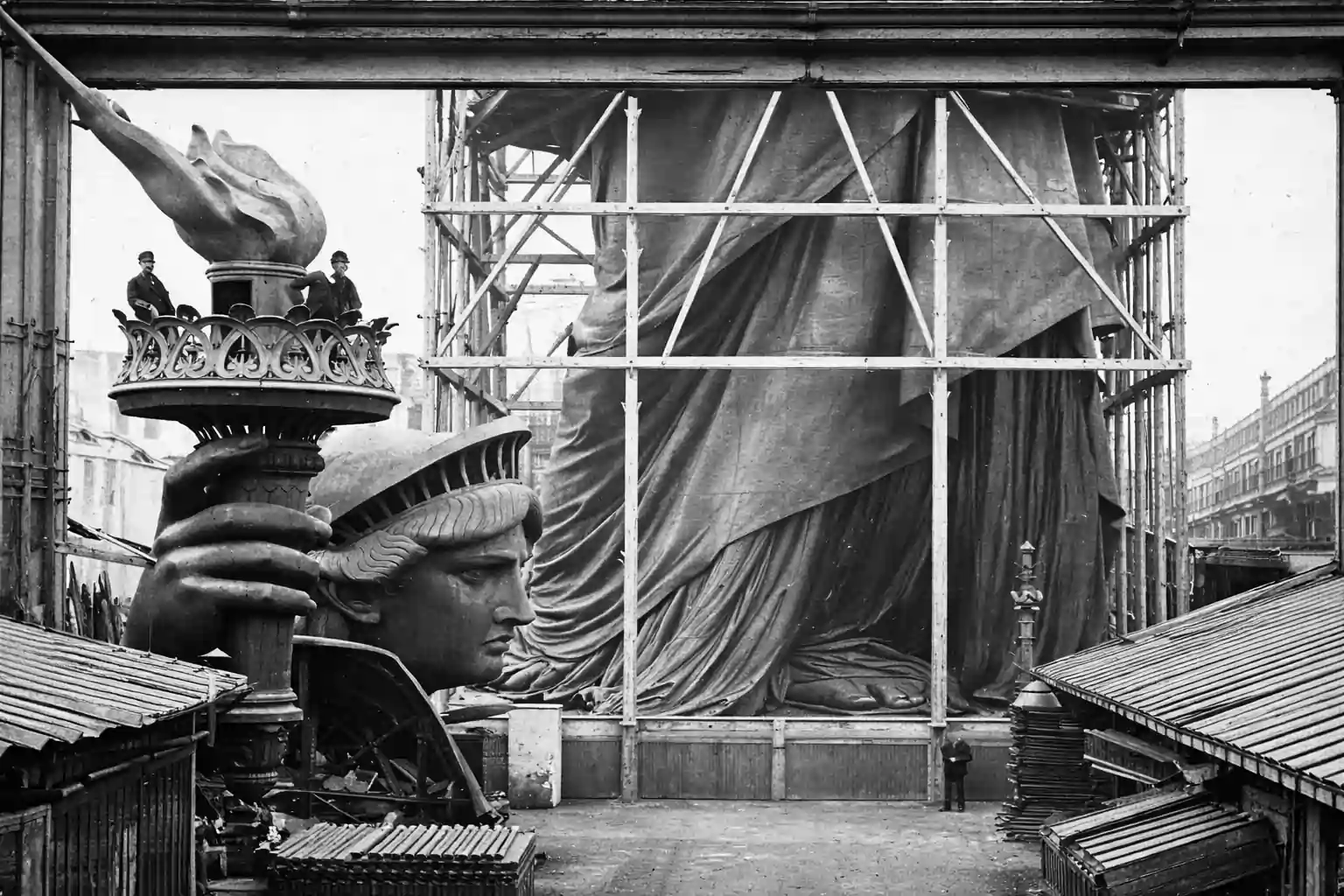
To support the 151-foot statue, Eiffel designed a revolutionary iron framework. The system allows the copper skin, just 3/32 inch thick, to expand and contract with temperature changes while keeping the structure stable. Over 300 copper sheets were shaped in Paris using the repoussé technique and carefully numbered for shipment.
The engineering solved a major challenge: how to maintain a massive, hollow copper statue that could withstand strong harbor winds, harsh weather, and the weight of its raised torch. Eiffel’s framework remains one of the statue’s most enduring achievements.
How the Statue Reached New York and Was Assembled (1884-1886)
The statue was finished in Paris in 1884, then taken apart into 214 crates and shipped on the French ship Isère, reaching New York in June 1885.
Americans built the pedestal, designed by Richard Morris Hunt, while Bartholdi supervised the reassembly on Liberty Island.
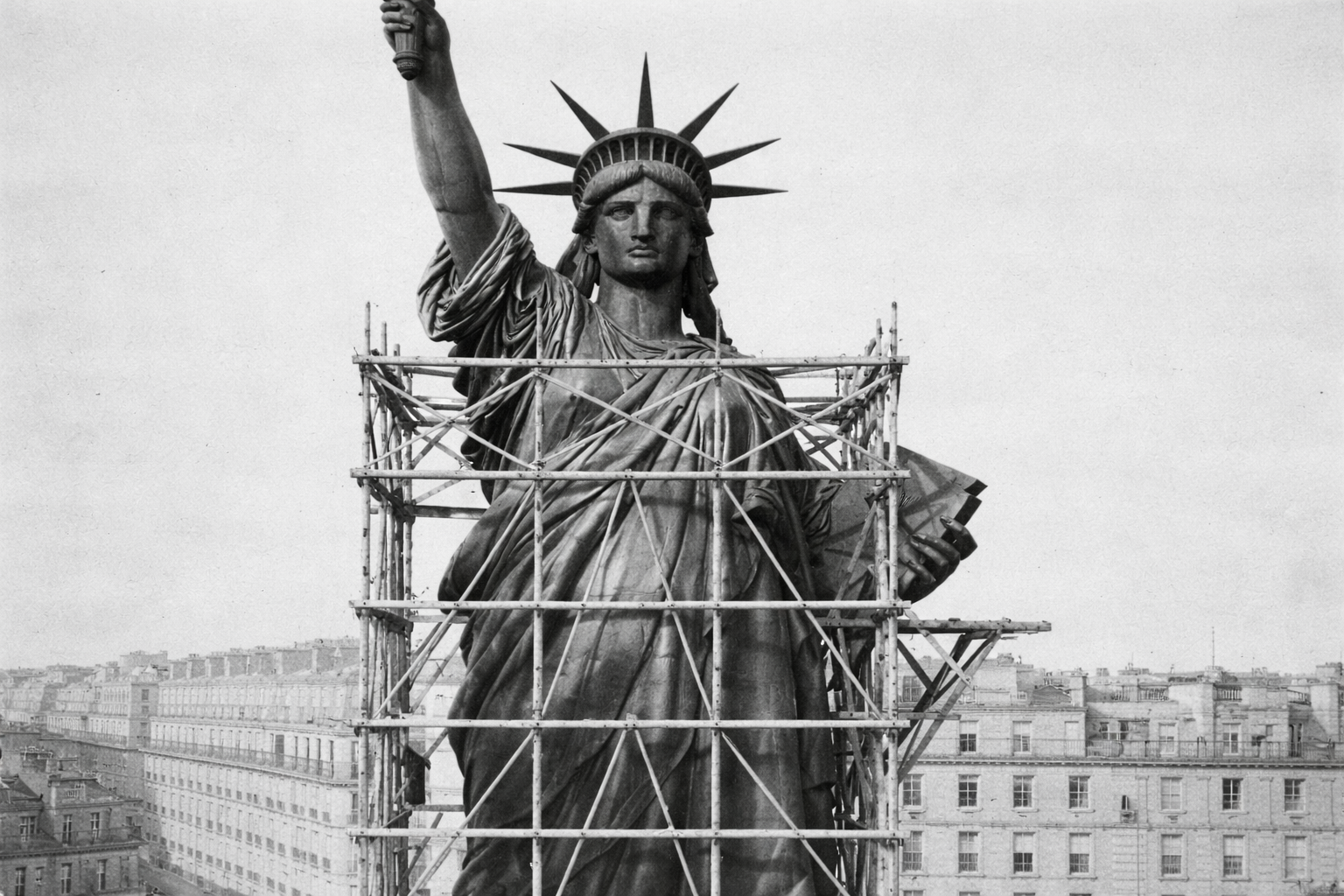
The reconstruction took four months, raising each copper section with cranes and scaffolding. On October 28, 1886, President Grover Cleveland dedicated the statue during a grand ceremony, complete with a naval parade and cheering crowds.
How It Became a Symbol for Immigrants (1892-1954)
When Ellis Island opened in 1892, millions of immigrants passing through New York Harbor saw Lady Liberty as their first American sight. Emma Lazarus’s poem “The New Colossus”, installed inside the pedestal in 1903, welcomed newcomers as the “Mother of Exiles.”
The statue became a powerful symbol of hope, freedom, and opportunity, representing the American dream for immigrants seeking a better life.
Restoration and UNESCO Recognition (1980s-Present)
By the 1980s, the statue required major repairs. Conservators replaced corroded iron with stainless steel, installed new stairways, and created a new gold-leaf torch faithful to Bartholdi’s original vision. The restoration preserved structural integrity while improving visitor safety.
Today, the Statue of Liberty is a UNESCO World Heritage Site, attracting around 4 million visitors annually.
Liberty Island features modern museums and interactive exhibits, where travelers can learn about the statue’s design, engineering, and role in immigration history. Visitors can see the original torch, Bartholdi’s models, and enjoy stunning panoramic views of New York Harbor and Manhattan.
Conclusion
The Statue of Liberty is a memorable experience for travelers of all ages. On Liberty Island, you can explore the museum, pedestal, and crown, while enjoying breathtaking views of New York Harbor.
Lady Liberty’s story combines French artistry, American determination, and universal ideals of freedom, making her a timeless symbol.
From Bartholdi’s design to Eiffel’s engineering and Pulitzer’s fundraising, every detail reflects the power of international cooperation.
Whether you’re drawn to history, immigration stories, or scenic sightseeing, the Statue of Liberty offers an inspiring and unforgettable adventure in the heart of New York City.
Frequently Asked Questions
Who designed the Statue of Liberty?▾
Who built the Statue of Liberty?▾
When was the Statue of Liberty built?▾
Why was the Statue of Liberty built?▾
How tall is the Statue of Liberty?▾
What is the Statue of Liberty made of?▾
How long did it take to build the Statue of Liberty?▾
Where was the Statue of Liberty made?▾
Who funded the Statue of Liberty?▾
What does the Statue of Liberty symbolize?▾
Sierra
Published on Statue of Liberty Cruises


