What Does the Statue of Liberty Stand For? Meaning & Symbolism Guide
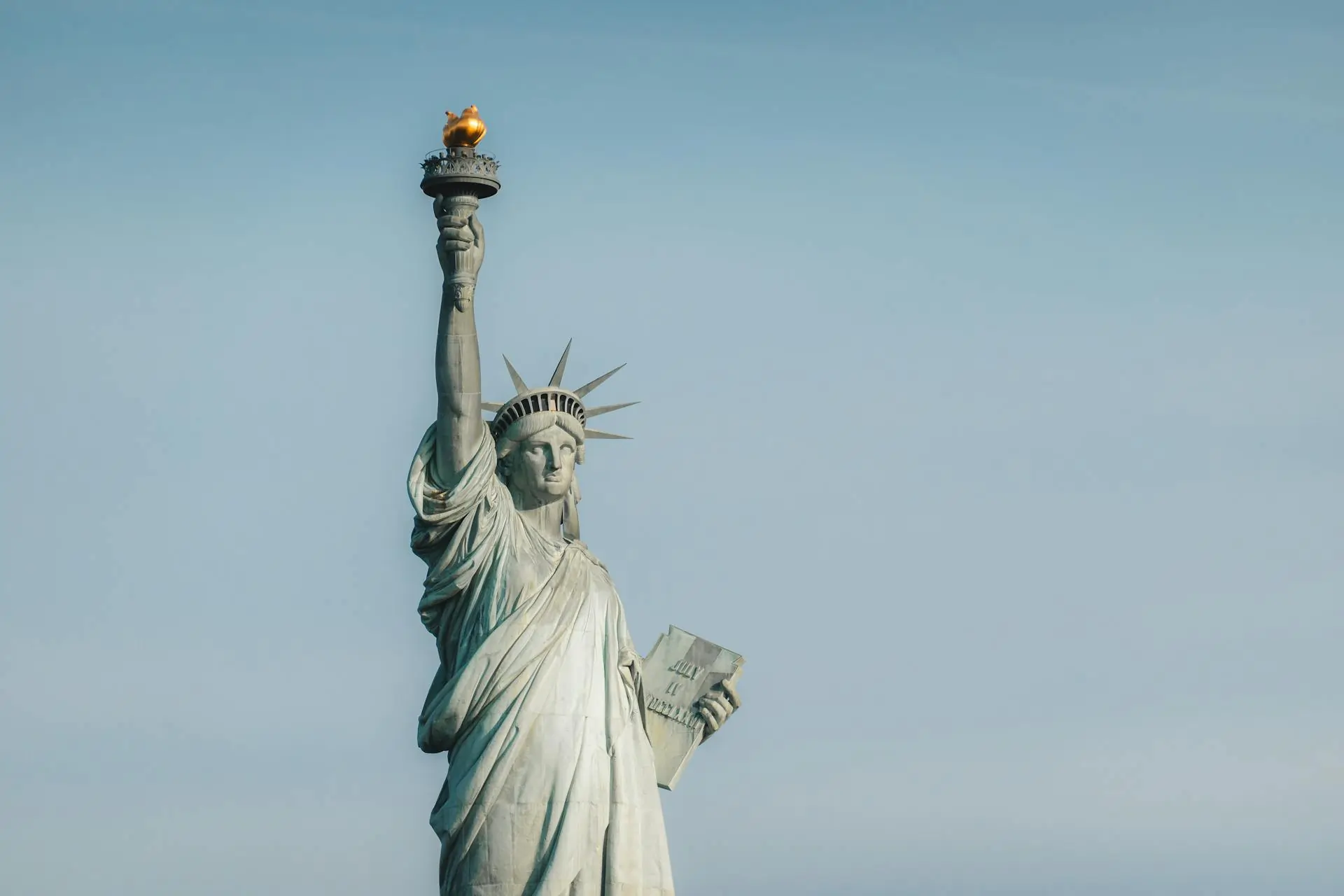
The Statue of Liberty is one of the most famous monuments in the world. It stands on Liberty Island in New York Harbor. For millions of visitors, both in the past and today, it is often the first or most memorable sight of America. But what the Statue of Liberty stands for is not just one simple idea.
From the very beginning, the statue was made to celebrate, inspire, and show many different meanings at the same time.
Frederic Auguste Bartholdi, the sculptor, had a clear vision for it, but there is no single definition. Each part of the statue tells its own story. Over time, these meanings have grown, changed, and sometimes been debated.
Today, the Statue of Liberty is not just a monument. It is a living symbol whose meaning depends on history, ideas, and people’s experiences.
Why Was the Statue of Liberty Built?
The idea for the Statue of Liberty started in France in the early 1860s. Edouard de Laboulaye, a French thinker, historian, and opponent of slavery, suggested making a big monument as a gift to the United States. He admired how America had fought for independence, its Constitution, and the end of slavery.
The statue was meant to celebrate 100 years of American independence and to honor the friendship between France and the United States. It also showed shared values like freedom, democracy, freedom of speech, freedom of religion, trade, self-choice, and standing against unfair rule.
At the same time, Laboulaye thought France, which was also having its own struggles with democracy, could learn from what America had done.
How the Statue of Liberty Was Designed and Built
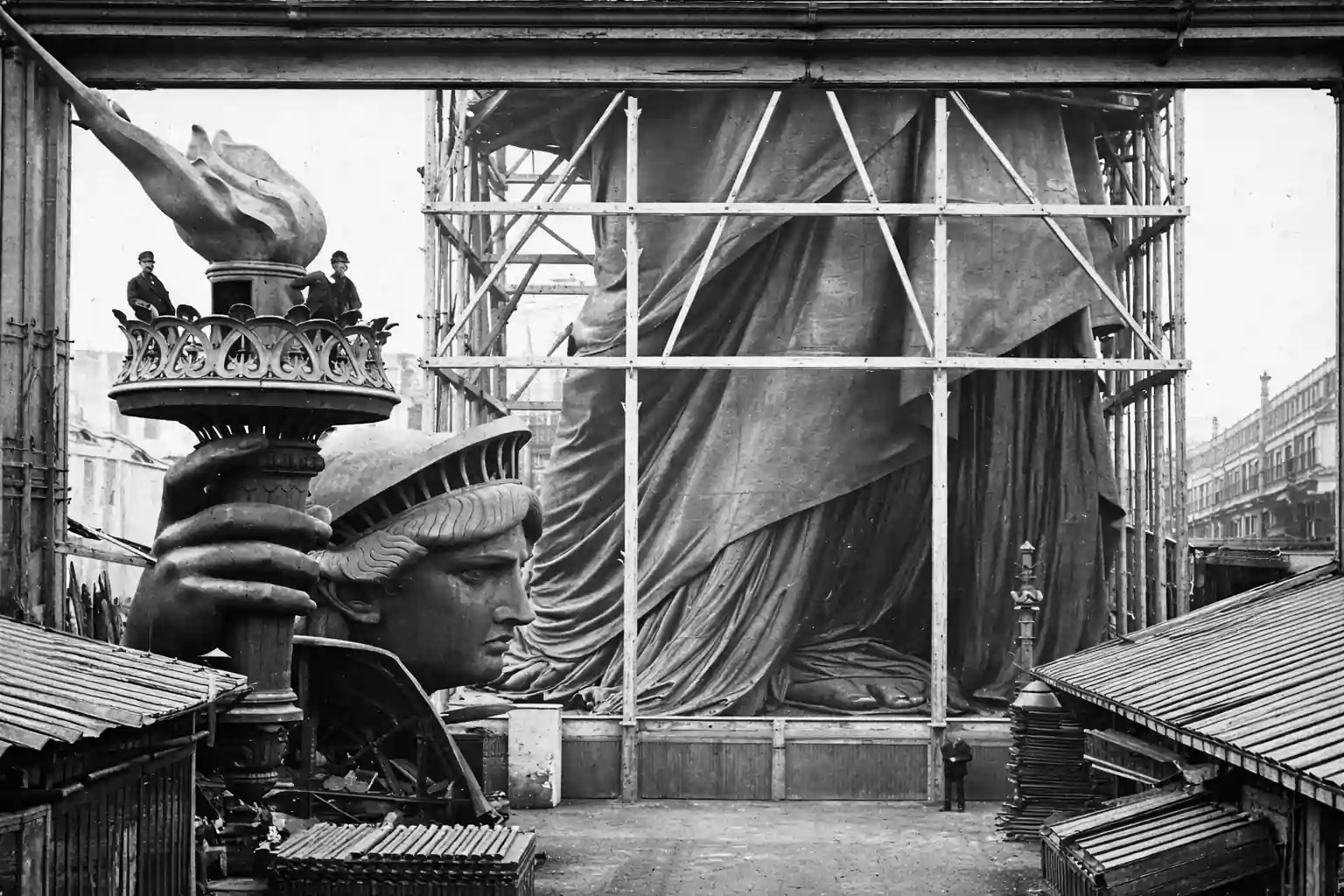
Frederic Auguste Bartholdi made the statue look like a very big woman. He got the idea from Libertas, the Roman goddess who stands for freedom. Many old statues are of women, which is why people call her Lady Liberty.
She wears a long robe like the togas people wore in ancient Greece and Rome. This connects her to the first ideas of democracy that helped shape the countries we live in today.
Bartholdi thought carefully about every part of the statue. He wanted it to look peaceful and strong. He wanted it to show progress and hope, not fighting or anger.
How Engineers Like Eiffel Made It Possible
Making the Statue of Liberty was not easy and required smart engineering. Bartholdi worked with Alexandre Gustave Eiffel, the same man who later built the Eiffel Tower and was one of the key figures in the Statue of Liberty’s construction.
Eiffel built a strong iron frame inside the statue. This frame supports the copper exterior and keeps the structure stable even during strong winds in New York Harbor.
The statue was made by hammering thin copper sheets over a wooden frame. These sheets were then attached to the iron skeleton that Eiffel designed.
How the Statue Was Built and Brought to America
The Statue of Liberty was built in France starting in the early 1870s and was finished in 1884. After that, it was taken apart into 350 pieces and packed into crates. These pieces were sent to the United States on a French Navy ship called Isere, and they arrived in New York Harbor in June 1885.
At the same time, the base of the statue, called the pedestal, was being built on Bedloe's Island. It was designed by an American architect named Richard Morris Hunt. Work on the pedestal started in 1884 and continued through 1885.
When the pedestal was finished, the statue was put back together. The last piece was fastened on October 28, 1886, during a special ceremony led by President Grover Cleveland. Over time, the statue’s copper surface turned green, which is the color we see today.
What Each Part of the Statue of Liberty Means
What Does the Torch Represent?
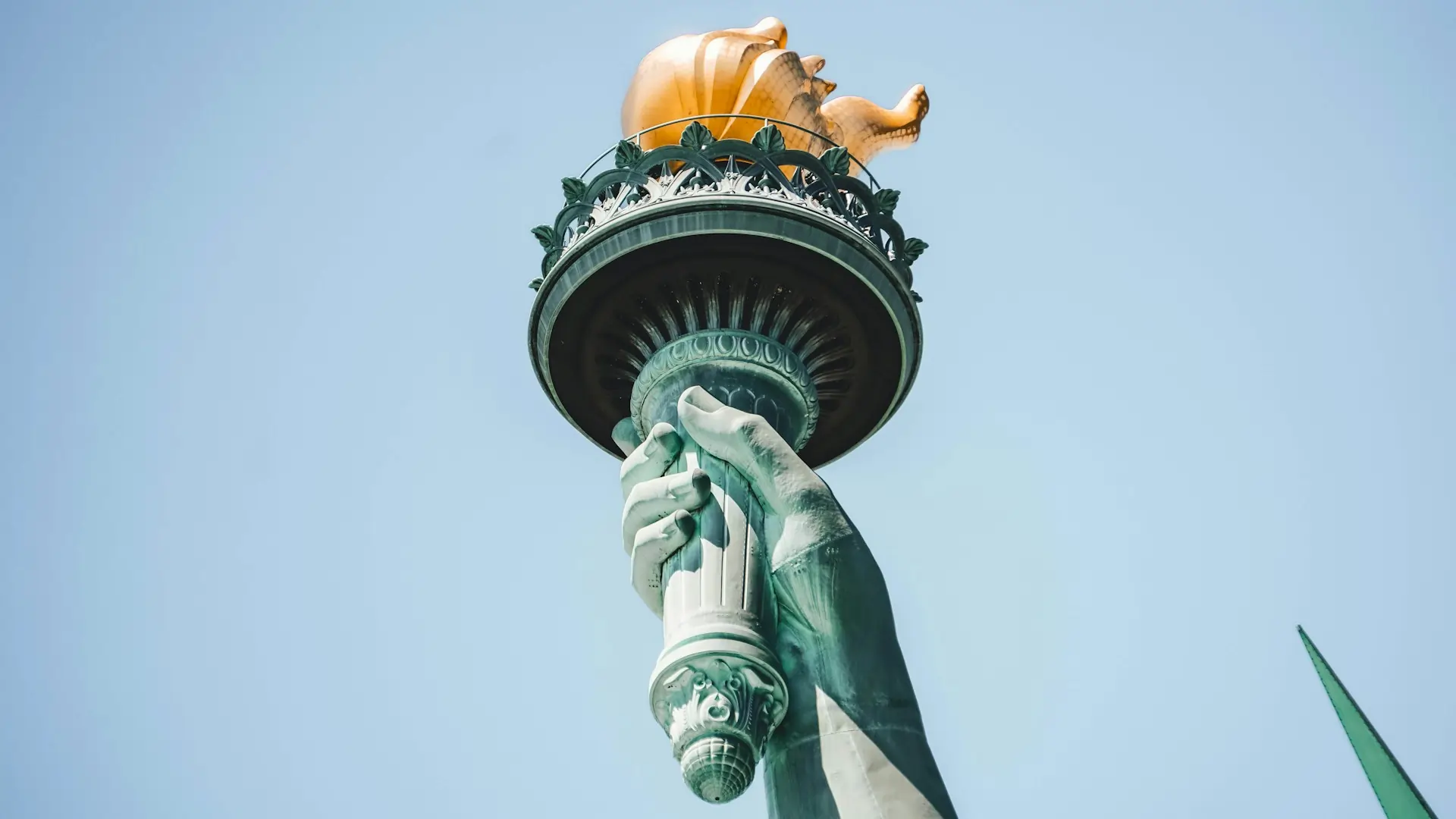
The torch is made of copper and covered with gold leaf. Lady Liberty holds it high in her right hand. During the day, the sunlight makes the gold shine, and at night, the lights make it glow.
The first torch was used to act like a lighthouse and was lit from inside. Today, that original torch is in the museum lobby. The torch we see now was put in place in 1986.
The torch shows enlightenment, which means it lights the way to freedom and justice. It also matches the statue’s official name, "Liberty Enlightening the World." Bartholdi chose a torch to show peaceful progress and not fighting. A long time ago, people thought it might help guide ships into the harbor, but that idea did not really happen.
What Do the Crown and Its Rays Mean?
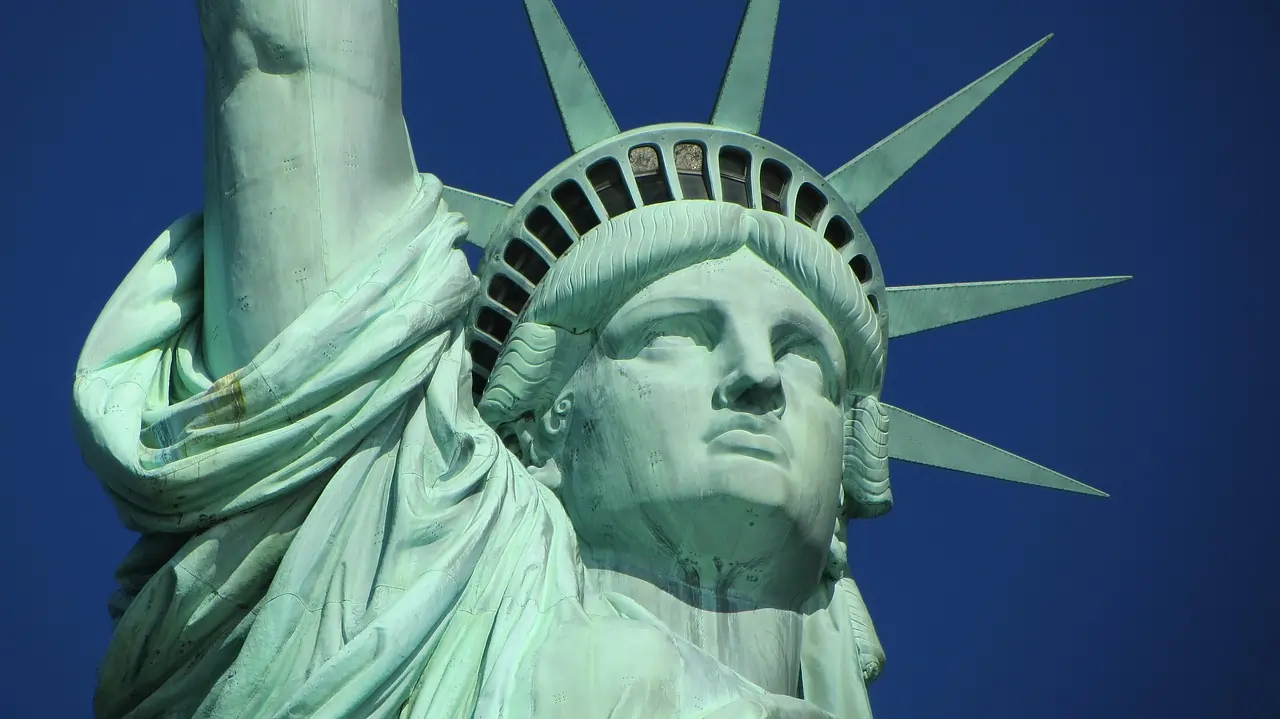
The crown has seven rays that stand for the seven continents and seven seas. This shows that liberty is for the whole world.
The crown also has 25 windows. These represent gemstones and the light from heaven. At night, the crown glows from the inside, so people can see this meaning even more clearly.
What Does the Tablet Stand For?
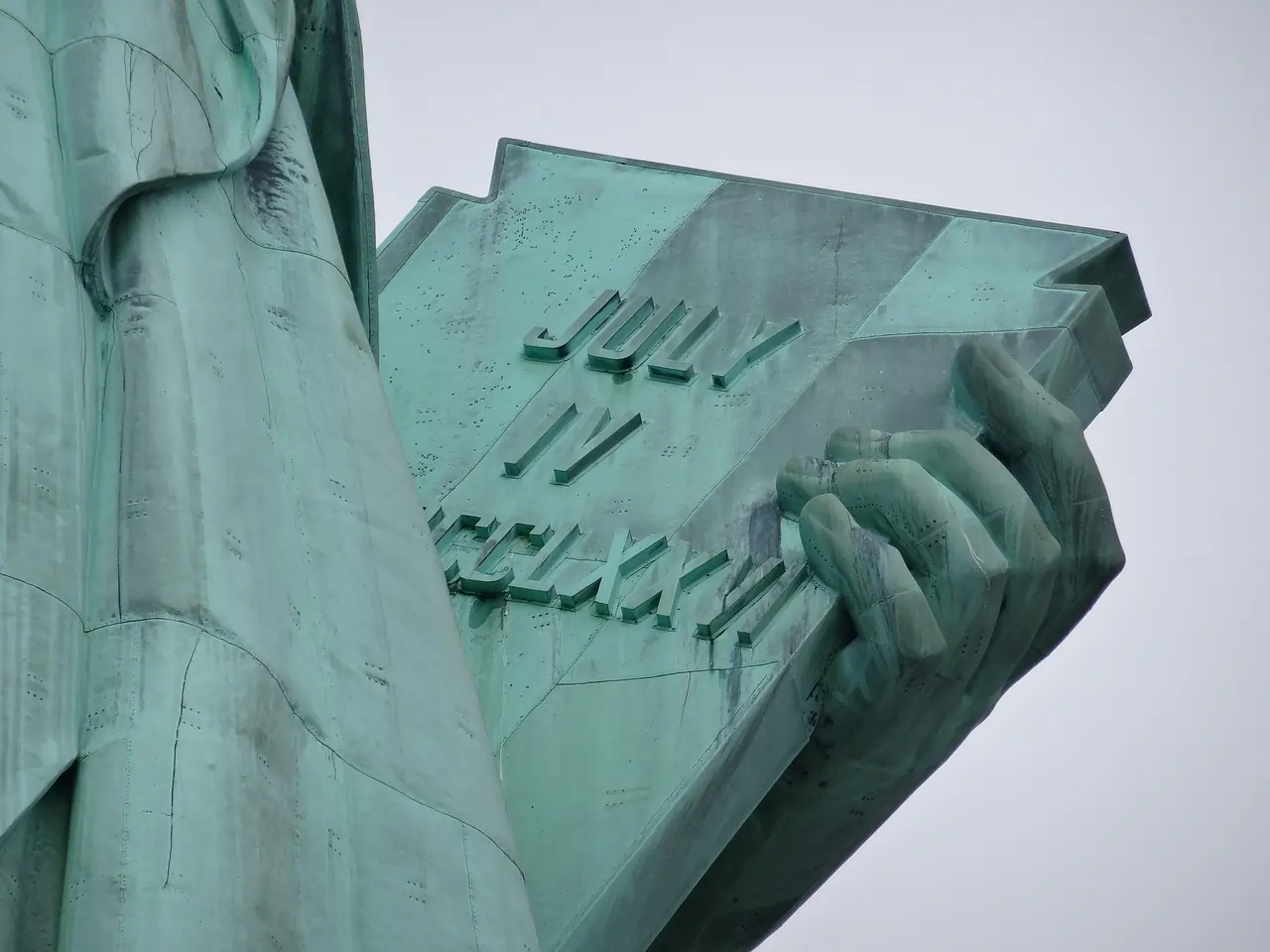
The statue holds a big copper tablet in her left hand. It is more than 23 feet long. On it are the Roman numbers for July 4, 1776. This is the day the United States declared independence.
The tablet is like a book of law. Its shape shows that laws are very important for the United States. At first, Bartholdi thought about putting broken chains in her hand instead, but he decided not to because it could have caused problems after the Civil War.
Why Are There Broken Chains at Her Feet?
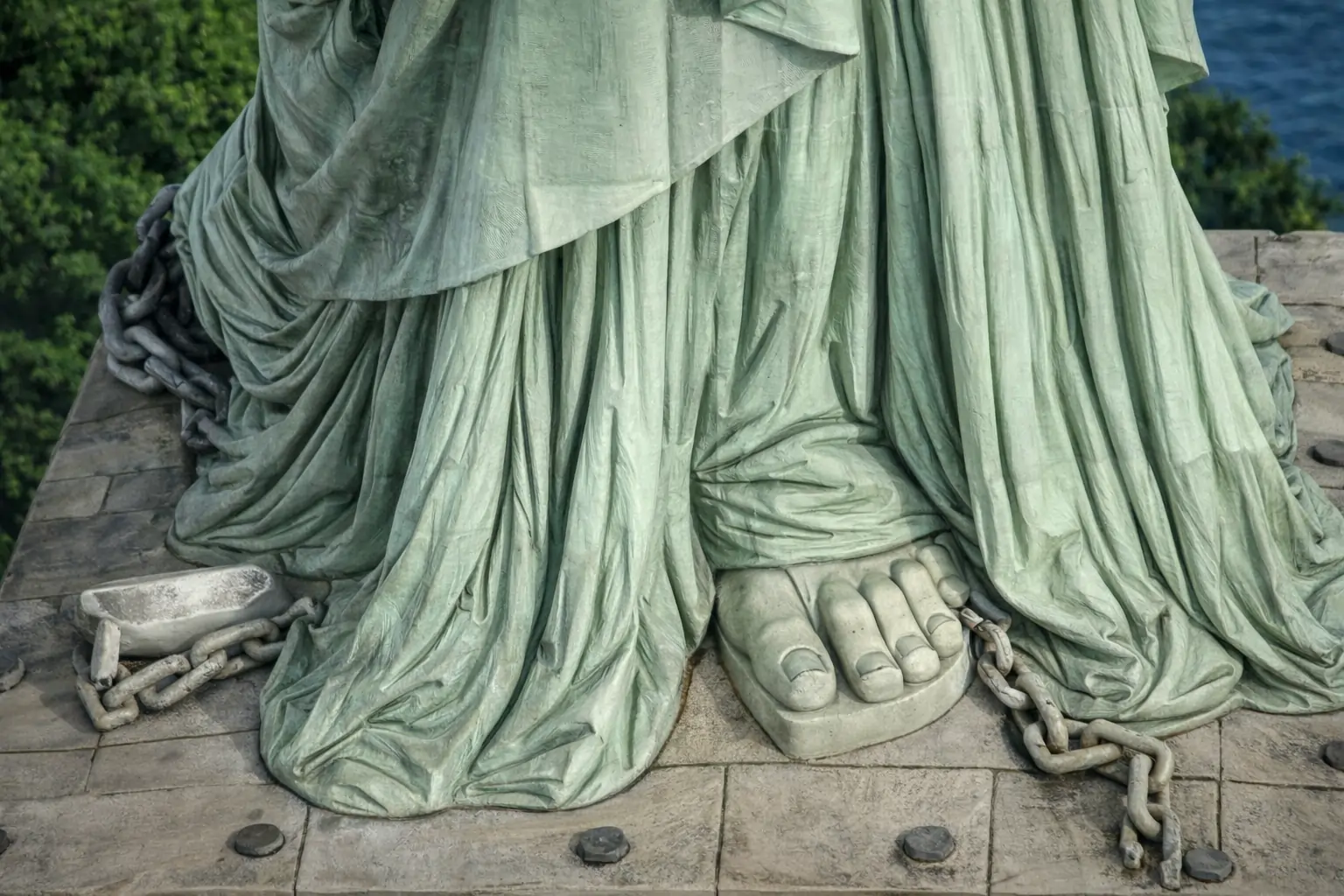
At the statue’s feet are broken chains and shackles. They show that people are free from slavery and unfair control. The chains are partly hidden under her robe, so many people cannot see them from the ground. You can only see them clearly from above.
Her right foot is lifted, showing that she is stepping forward. This means freedom is always moving forward and that the journey to be free never stops.
How the Famous Poem Changed the Statue’s Meaning
Who Wrote “The New Colossus” and Why?
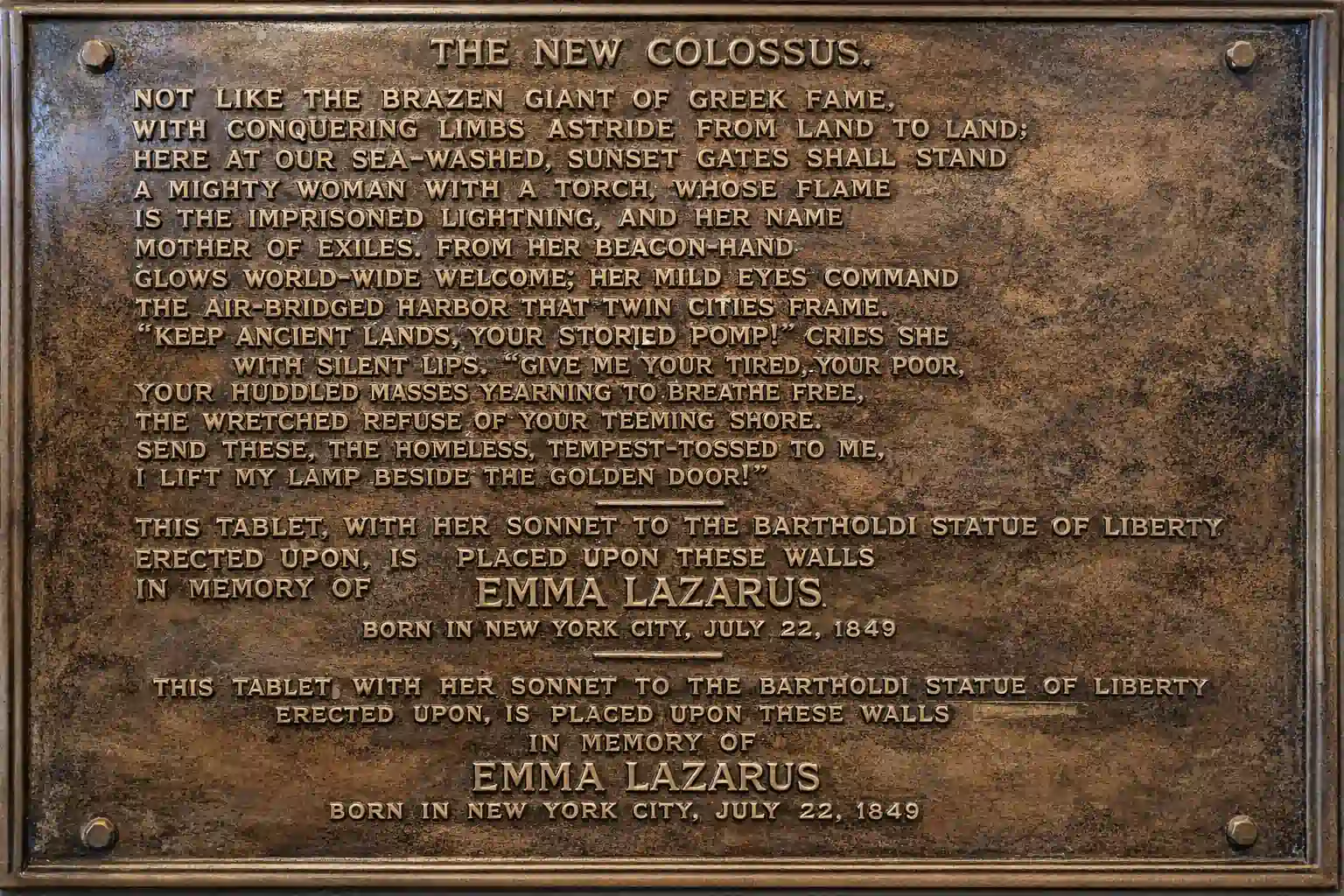
During the time people were raising money to build the statue’s base, there were events all over New York City. Emma Lazarus was asked to write something for the project. She wrote a poem called “The New Colossus.” She was inspired by helping Jewish people who had to leave their homes in Eastern Europe because life there was very hard.
Her poem changed how people thought about the statue. Before, it was mostly a gift and a symbol of friendship between France and the United States. After her poem, it became a symbol of hope for immigrants coming to America. She called the statue the “Mother of Exiles” and wrote the famous lines:
“Give me your tired, your poor,
Your huddled masses yearning to breathe free…”
In 1903, the poem was put on a bronze plaque inside the pedestal. It is still there today.
What the Statue of Liberty Meant to Immigrants
In the late 1800s and early 1900s, millions of people came to America by ship. When they sailed into New York Harbor, the Statue of Liberty was often the first thing they saw. Seeing her for the first time made them feel very emotional.
These immigrants were looking for better lives. They were leaving places with little food, few jobs, no schools, limits on their religion, or strict governments. They wanted to be free to speak, vote, travel, and follow their beliefs. They also hoped everyone would be treated equally, no matter if they were a boy or a girl, or the color of their skin.
The statue became a sign of hope, new chances, and a welcome to all. It reminded people that America was built by immigrants “yearning to breathe free.”
Today, most people do not arrive by ship anymore. Some may only see the statue for a short time from above when they fly into airports near New York.
What the Statue of Liberty Means to Americans Today
For people living in America, the Statue of Liberty stands for freedom, fairness, and the rights they have every day. These rights include being able to speak freely, practice any religion, move around, and vote.
The statue also reminds Americans of all the immigrants who worked hard to help build the country. Their effort and courage made America grow and succeed.
Seeing the statue encourages people to be thankful for these freedoms, because sometimes they are taken for granted. It also teaches ideas like loyalty, pride, unity, and responsibility. People are expected to help and support their country.
Some Americans also see the country as a place of peace, where everyone works together to keep things stable and avoid problems.
What the Statue of Liberty Says to the World
For people in other countries, the Statue of Liberty sends a strong message. It shows that the United States stands for freedom, chances to succeed, equality, and having many different kinds of people.
The statue tells everyone that they can come to America and try to build a better life. It shows that the country has people from many cultures and backgrounds.
But not everyone sees it the same way. Some people see the statue as a sign of hope. Others wonder if it really still welcomes everyone.
For example, immigrants who come to the United States through the southern border might not feel the same connection to the statue as those who came by ship to New York long ago. Their experiences are different, and they see the country in a different way.
How the Meaning of the Statue Has Changed Over Time
The meaning of the Statue of Liberty has changed over many years. At first, it stood for ideas like freedom of religion, freedom of speech, being able to trade and make your own choices, and saying no to kings or strict rulers.
Later, people also saw the statue as a sign that America welcomes immigrants and new people coming to start a better life.
The statue has also been used to show patriotism. During wars, it helped encourage people to buy war bonds and gave hope and strength to soldiers returning home.
How Immigration Rules Affected Lady Liberty’s Symbolism
Even though the statue was meant to welcome everyone, history did not always match this idea. Some laws, like the Chinese Exclusion Acts and the Immigration Act of 1924, made it hard for people to come to America just because of their race or where they were from. These rules were based on the 1890 census and were not changed until 1965. After that, the rules focused on letting skilled workers and families join their relatives.
At times, some people in the United States also believed that certain groups of immigrants could harm the nation.
Because of this, some experts say that the statue as a symbol of welcome is only partly true. Emma Lazarus’s poem helped create this image, but over time, the meaning of the statue has changed.
What the New Statue of Liberty Museum Teaches
Today, people sometimes see liberty, or freedom, as a “contested idea,” which means that not everyone agrees on what it really means.
The new Statue of Liberty Museum, a 100-million-dollar project built after 9/11, shows this idea. It has interactive exhibits that help visitors think about what liberty is and how people imagine it.
Experts say that liberty is not something that just happens on its own. People have to work to protect it and keep it alive.
This makes us ask an important question: Does the statue still stand by a “golden door” that welcomes everyone, or does it mean something more complicated in today’s world?
Why the Statue of Liberty Still Inspires the World
Even though people sometimes argue about what it means, the Statue of Liberty is still a very powerful symbol around the world.
In 1984, it was named a UNESCO World Heritage Site, which means it is important for all of humanity. It was restored for its 100th birthday in 1986.
The statue has inspired people everywhere to fight for freedom and human rights. Its picture has been used in protests, rallies, and campaigns, showing that people all over the world want liberty and justice.
How to Visit the Statue of Liberty Today
The Statue of Liberty still attracts millions of visitors every year. It stands on Liberty Island, which is separate from Ellis Island.
You can visit both islands by taking a ferry with Statue City Cruises. This is the only company allowed by the National Park Service to take visitors there.
There are different kinds of tickets you can get:
General admission, which lets you walk around the grounds and visit the Ellis Island museum
Pedestal access, which lets you go up into the base of the statue
Crown access, which lets you climb up into the crown (these tickets are limited)
The Ellis Island Hard Hat Tour, which is a guided tour of the old hospital
Important Rules and Tips for Visitors
If you have a crown ticket, you must pick it up in person. You need to show a valid ID and the same credit card you used to buy it. Everyone in your group must be there too. These tickets let you go through a special fast security line.
To reach the crown, you have to climb 162 stairs. There is no elevator from the pedestal. Inside, it can be up to 20 degrees hotter than outside, and there are no bathrooms.
Wheelchairs are available on the island, but there are only a few, and they are not allowed on the ferries. You can bring strollers, but you may need to leave them in certain areas depending on your ticket.
Ferries go back and forth between Liberty Island and Ellis Island. Once you leave the ferry system, you cannot go back in. Refunds are only given in special situations, such as if you cancel 24 hours before your visit or if the ferry is closed because of the weather.
Conclusion
The Statue of Liberty stands for freedom, hope, equality, chances to do better, and moving forward. It shows the dreams of immigrants, the values of America, and the ongoing effort to understand what freedom really means.
For some people, she is like a mother who welcomes everyone. For others, she makes them think about fairness and how everyone is treated.
Her meaning is not always the same. It changes over time, depending on history, culture, and how people see her. But one thing stays the same. She keeps inspiring people to believe in a better and freer world.
Frequently Asked Questions
What does the Statue of Liberty stand for?▾
Why was the Statue of Liberty given to the United States?▾
What is the meaning of the torch?▾
Why is it called “Liberty Enlightening the World”?▾
What is the meaning of the broken chains at her feet?▾
What does the tablet in her hand represent?▾
Why is the Statue of Liberty seen by immigrants as hope?▾
What do the seven rays on her crown mean?▾
Does the Statue of Liberty stand for peace?▾
Why is the statue important today?▾
Sierra
Published on Statue of Liberty Cruises


